5 Benefits of Reformer Pilates You Might Not Expect
What a reformer actually does
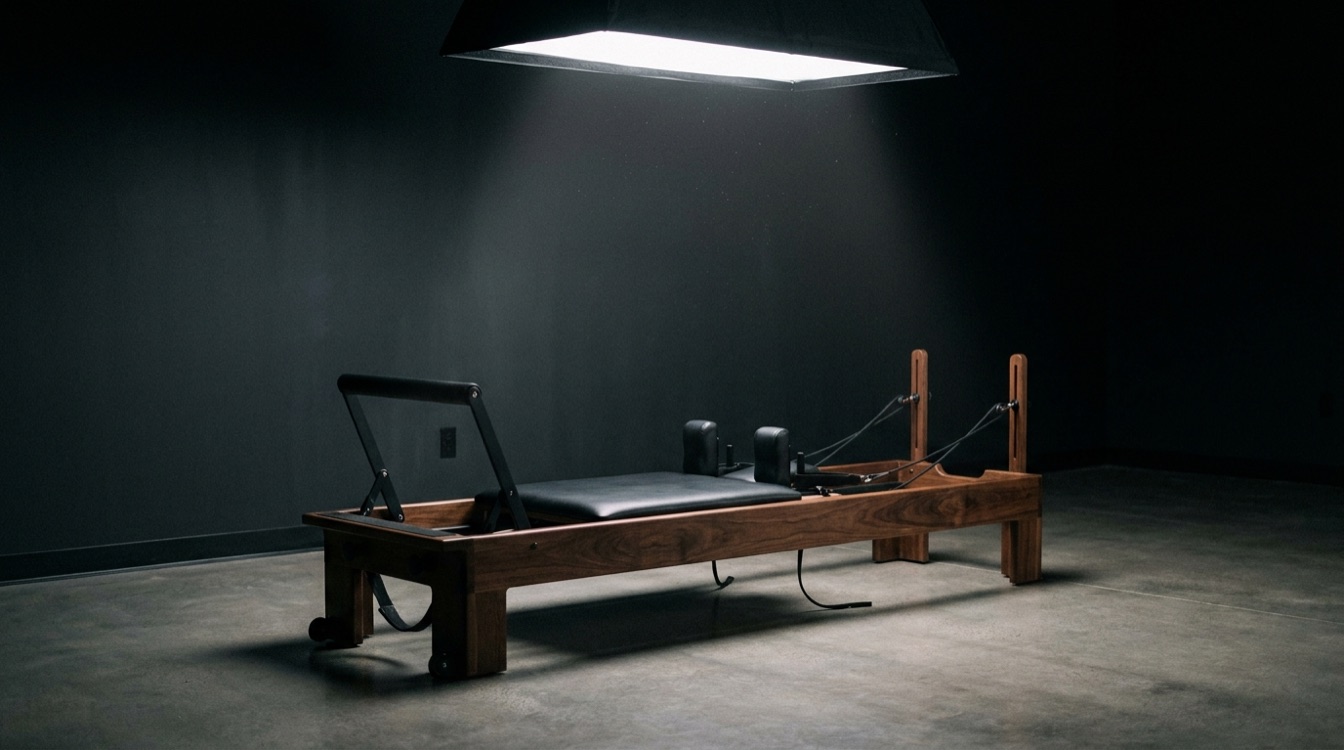
A reformer is a sliding carriage on a frame, with adjustable springs and straps and a footbar to push or pull against. Most people arrive expecting a stretch class or a gentle workout. What they find is a machine that loads the body in a very controlled way, with an instructor watching how they move.That control is where the benefits come from. The springs add resistance on the way out and again on the way back, so every repetition asks you to stay organized instead of letting momentum do the work. Here are five things it trains that tend to surprise people, and then how to try it.
1. Trunk control that carries over to posture
The first change most people notice is not a bigger muscle but a steadier middle. Reformer exercises keep asking your trunk to stay still while your arms and legs move, and the carriage will not let you cheat. Over a few weeks that builds the habit of bracing and breathing at the same time, rather than clenching and holding your breath.Posture is hard to fix by reminding yourself to sit up straight. It is easier to hold when the muscles around your ribs, spine and hips can do the job, and a reformer trains exactly that without loading the spine with heavy weights. If your days are spent at a desk, our guide to Pilates for desk workers goes through the movements that matter most.
2. Strength without heavy loading
A spring is a different kind of resistance from a barbell. The tension changes through the range and you set the pace, so the slow return is where much of the work happens. People who lift regularly are often surprised by how hard a light spring setting feels when the tempo is slow and the position is strict.That makes it a useful addition to gym training rather than a replacement for it. It builds strength in the muscles that stabilize your hips, shoulders and trunk, with no impact and no heavy load. We cover where reformer work helps with strength and where it falls short in does Pilates build muscle.
3. Mobility you can control
Pilates is not mainly a stretching practice, and that is the point. Reformer work moves you through a long range of motion while the springs and the carriage give you something to push against, so you build strength toward the end of your range as well as in the middle.That combination suits people who feel stiff in the hips, upper back or shoulders, because any extra range arrives with the control to use it. If a movement is too big on the day, the springs can assist and the range can be shortened. It is not a flexibility test, and you do not need to touch your toes to start.
4. Body awareness, balance and coordination
Reformer exercises often ask your arms and legs to do different jobs while your trunk stays quiet. That is hard at first for almost everyone, and it is the training effect, not an obstacle to it. Coordinating breath, bracing and movement across several joints builds a clearer sense of where your body is in space.The practical side shows up in ordinary movement: getting up from the floor, carrying a bag, holding a steady stance on a moving train. Those are the skills the format practises. For older adults, the adjustable support and an instructor who sees every repetition make it a reasonable place to build balance.
5. One machine that scales to you
The same reformer works for a first-time mover and for a competitive athlete, because the spring load, the range and the exercise can all be changed. The springs can assist you while you are learning and challenge you once you are strong. That is why runners, lifters and athletes use it alongside their main training, and why beginners can start on the same equipment.It is also low impact: no jumping and no dropped weights, which makes it a sensible choice on a recovery day or when you want to train without pounding your joints. If you are weighing formats, reformer versus mat Pilates compares the two.
How long before you notice
The first change is simply that the machine stops feeling confusing, usually within the first few classes. Changes in how you move build more gradually, and they depend on how often you come, what you do the rest of the week and where you are starting from.A reasonable plan is a steady rhythm of one or two sessions a week for a few weeks before you judge it. One class mostly teaches you the equipment. The format shows itself over several.
Trying it at Fittopia Wellness Studio
Fittopia Wellness Studio is at 4940 No. 3 Road, Unit 122 in Richmond. Group classes run on AXIS reformers in small classes, so the instructor can see your setup and adjust it; the AXIS Reformer page explains how they work. If you would rather start one to one, or you have a specific goal, private Pilates gives you an instructor for the whole session, with 1-on-2 sessions available if you want to train with a friend.New customers can start with a group intro offer: $49 for two classes (valid for 30 days), $99 for two weeks of classes, or $159 for four weeks, with up to one class a day on the two memberships. A private intro session is $50 for a full 60 minutes. GST added at checkout.Studio hours are Monday 11:00 AM to 7:30 PM, Tuesday to Friday 9:30 AM to 7:30 PM, Saturday 10:00 AM to 2:00 PM and Sunday 8:30 AM to 2:00 PM.The Studio holds a 5.0 rating from 215+ Google reviews.If this is your first time on a reformer, the beginners page covers what to wear and what happens in a first class. If you have an injury or pain, or you are pregnant, check with a regulated health professional before you start, and tell your instructor before class. This guide was last updated in October 2026.
More Articles
Ready to train?
Start Your Journey at Fittopia
Whether you are brand new to fitness or looking to level up, Fittopia has the coaches, equipment, and environment to get you there.
Explore Fittopia Wellness Studio →